You open Mail on a newer iPhone and the inbox has rearranged itself. One message sits pinned at the top under a heading called Priority. The preview line under each sender reads like a summary now, not the sender’s own first sentence. Your mail has split into tabs named Primary, Transactions, Updates, and Promotions. Some of this is Apple Intelligence, some of it is a separate sorting feature, and most of it switched on without you choosing it.
Apple Intelligence adds three features to Apple Mail: a Priority section that pins urgent emails to the top of your inbox, short summaries that replace the preview line under each sender, and a tap-to-summarize button for long threads. Summaries are generated on your device, with heavier requests routed to Apple’s Private Cloud Compute. Every part is optional.
What does Apple Intelligence actually do to your Mail inbox?
Apple Intelligence adds a small set of reading and writing features to Apple Mail, and the tabbed sorting most people notice first, Categories, is a separate thing that gets lumped in with it. Apple introduced Apple Intelligence on June 10, 2024 and shipped the Mail features when Apple Intelligence became available in iOS 18.1 that October.
Four Mail features carry the Apple Intelligence badge; Categories does not.
| Feature | What it does | Apple Intelligence? |
|---|---|---|
| Priority messages | Pins urgent mail to a section at the top of the inbox | Yes |
| Message summaries | Replaces the preview line under a sender with a short recap | Yes |
| Summarize thread | Condenses a long thread when you tap Summarize | Yes |
| Smart Reply | Suggests a quick reply and flags questions to answer | Yes |
| Categories | Sorts mail into Primary, Transactions, Updates, Promotions | No, separate feature |
The device line matters here. Priority messages and summaries run only on an Apple Intelligence device. Apple’s requirements footnote covers iPhone 15 Pro, iPhone 15 Pro Max, and every iPhone 16 model and later, plus iPads and Macs with M1 or later and the iPad mini with A17 Pro. Categories works far more widely, on any device running iOS or iPadOS 18.2 and macOS 15.4, with no Apple Intelligence chip involved.
Where you live decides what you get, too. Apple shipped the Mail features in US English first. iPhone and iPad owners in the EU got Apple Intelligence “for the first time” on March 31, 2025 with iOS 18.4, which also added French, German, Italian, Portuguese (Brazil), Spanish, Japanese, Korean, and Chinese (Simplified). Apple has kept adding languages since, and it lists the current set on its How to get Apple Intelligence page. Set Siri and your device language to something Apple has not covered yet and the summaries never show up.
What are Apple Mail Priority messages?
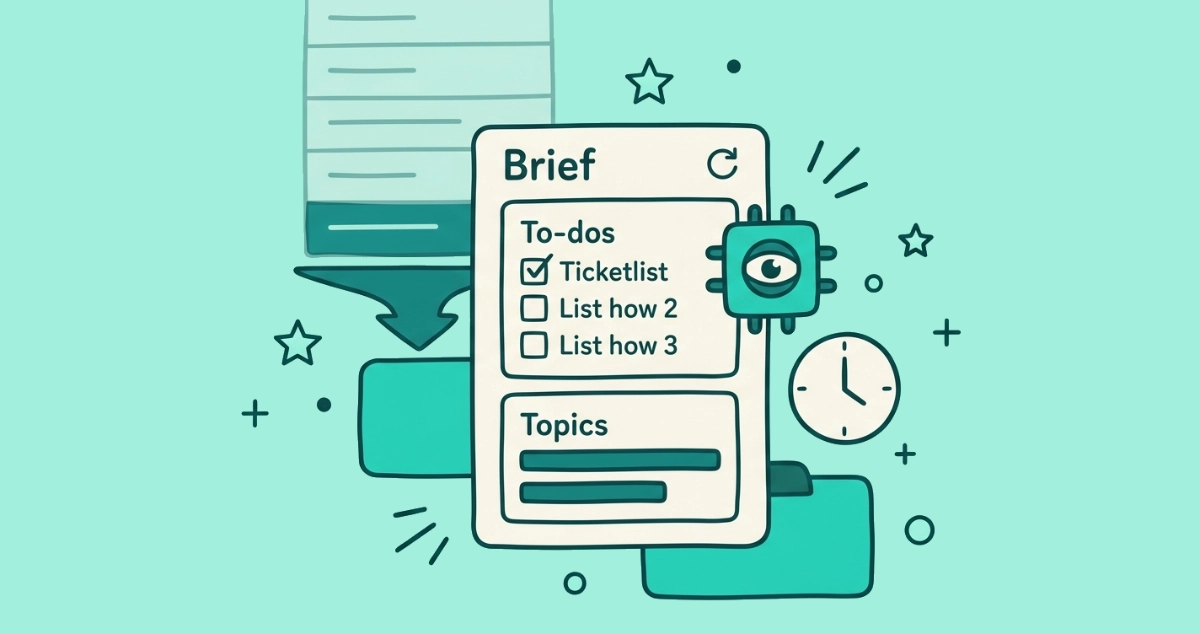
Priority messages is a section Apple Mail pins to the top of your inbox for mail it judges time-sensitive. In its June 10, 2024 announcement, Apple called it “a new section at the top of the inbox [that] shows the most urgent emails, like a same-day dinner invitation or boarding pass.”
The system watches for a handful of triggers: a same-day meeting or dinner invitation, a flight boarding pass, a package delivery notification, and urgent requests from people you email often. When Mail spots one, it lifts that message above the rest so you see it first. Everything Apple Intelligence does here is a prediction, so a genuinely urgent email can sit below the fold while a routine one gets promoted. Treat the Priority section as a helpful guess, not a guarantee that nothing important is buried underneath.
You control it from the inbox. Tap the three-dot menu at the top of the inbox and uncheck Show Priority to switch the section off. On a Mac, Apple’s Mail guide says to click an inbox, choose View in the menu bar, then click Show Priority Messages.
What do Apple Mail summaries change about your inbox?
Summaries replace the one-line preview under each sender with a short machine-written recap, so the first thing you read is Apple’s paraphrase rather than the sender’s own words. Apple’s framing at launch: “instead of previewing the first few lines of each email, they can see summaries without needing to open a message.” Open a long conversation and a Summarize button appears at the top. Tap it, and per Apple’s October 28, 2024 release note, “for long threads, they can tap or click Summarize to view pertinent details.”
A summary is a guess about what matters in a message, and the model can lean on the wrong sentence, dressing a promo up as something personal or flattening an urgent note into a shrug. Because Apple’s version rewrites the preview you use to triage, a bad summary there can cost you the mail entirely. We cover where these summaries go wrong, and how Gmail’s server-side version compares, in AI email summaries in Gmail and Apple Mail.
Are Apple Mail Categories the same as Apple Intelligence?
No. Categories is a separate sorting feature that does not need Apple Intelligence, and it reaches many more devices. Apple added it in iOS 18.2 in December 2024, then brought it to iPad and Mac with iPadOS 18.4 and macOS Sequoia 15.4. It sorts your incoming mail into four buckets: Primary holds personal mail plus time-sensitive items, Transactions collects receipts, orders, and shipping notices, Updates gathers newsletters, alerts, and subscriptions, and Promotions catches deals and coupons.
If Gmail’s Primary, Promotions, Social, Updates, and Forums tabs sound familiar, Apple built the same idea with four buckets instead of five. The mechanics differ underneath, and we break down how Gmail’s classifier decides in how AI decides what email you see. Apple’s version leans on on-device sorting rather than a server-side model reading every message.
Apple’s guide carries one caveat worth knowing before you go hunting for the tabs: the sorting is “not available in all countries or regions.” It also groups mail differently inside a category. Tap a Transactions message and you get a digest view of every Transactions message from that sender, while Primary stays ungrouped.
To switch Categories off, open Mail, tap the three-dot menu, and choose List View. Your inbox returns to a single chronological list, the way it looked before iOS 18.2.
Is Apple reading my email to do this?
Something has to read your mail to summarize or prioritize it, and Apple’s design keeps most of that reading on your device. Apple states it plainly on its Apple Intelligence privacy page: “When Apple Intelligence provides you with preview summaries of your emails, messages, and notifications, these summaries are generated by on-device models.”
When a request is heavier than the phone can handle, it can route to Private Cloud Compute, Apple’s server tier. Apple says of that data: “The data sent to and returned by Private Cloud Compute is not stored or made accessible to Apple. The data is processed only to fulfill your request, after which point the results are returned securely to your device and are not retained.”
Apple built a way to check that claim rather than take it. In the Private Cloud Compute security paper it published on June 10, 2024, Apple commits to “making software images of every production build of PCC publicly available for security research,” logs each build in “an append-only and cryptographically tamper-proof transparency log,” and states that “user data is never retained in any form after the response is returned.” Your iPhone refuses to talk to a server whose software has not been logged for inspection. That is a stronger posture than a service that reads every message on its own servers by default.
On-device does not mean unread. An automated system still opens your mail to describe it back to you, and Apple has shipped its share of summary mishaps. The privacy win is narrow and real: the reading stays close to you, and the content is not parked on a company’s servers. Apple’s wider Mail privacy stance runs the same direction, routing the tracking pixels that senders hide in your mail through Apple’s proxy so a marketer cannot tell when you opened a message.
How do I turn off Apple Intelligence email features?
You turn each feature off separately, and there is a master switch if you want all of it gone at once.
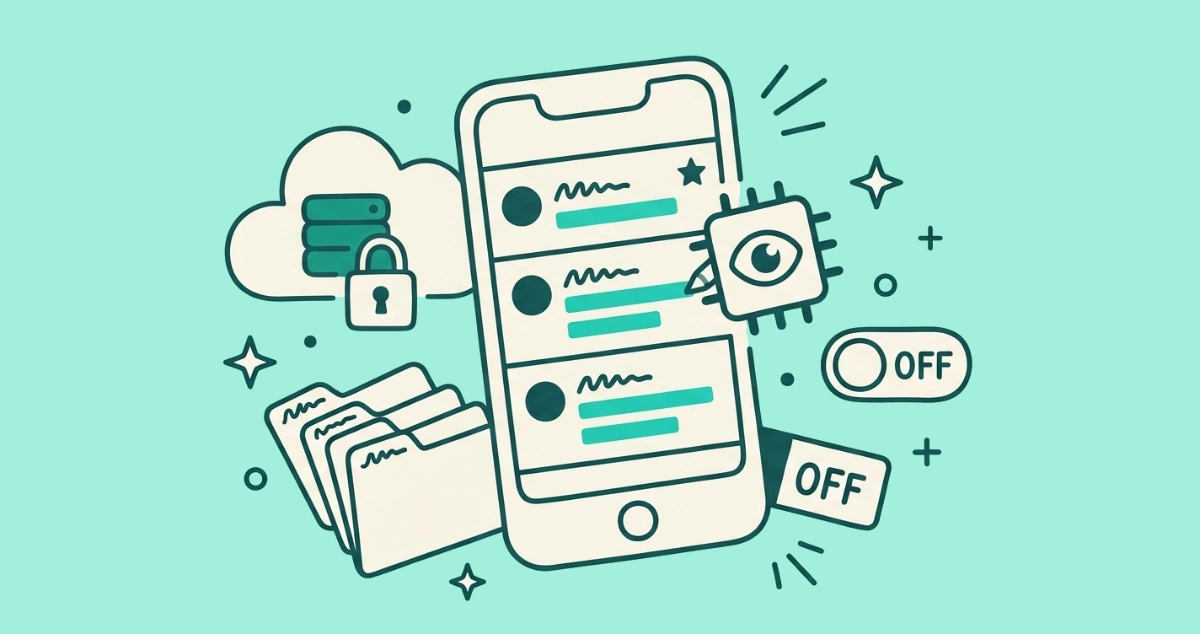
- Turn off summaries. Open Settings, tap Apps, tap Mail, and switch off Summarize Message Previews, the step Apple sets out in its Mail guide for iPhone. On a Mac, choose Mail > Settings, click Viewing, and deselect the same checkbox. Your inbox goes back to showing the first lines of each message.
- Turn off Priority messages. In Mail, tap the three-dot menu at the top of the inbox and uncheck Show Priority. On a Mac, use the View menu instead.
- Turn off Categories. In Mail, tap the three-dot menu and choose List View. Your mail returns to one chronological list.
- Turn everything off. Open Settings, go to Apple Intelligence, and switch the whole feature off. That clears summaries and Priority across Mail, Messages, and notifications in one move.
The end state is a plain inbox: first-line previews, newest mail on top, no Priority section, and no AI recaps. You keep Categories or drop it independently of the Apple Intelligence switch, since the two are unrelated.
Does any of this reduce how much email you get?
No. Priority messages, summaries, and Categories all rearrange or describe the mail you already receive. None of them cut the volume. If forty newsletters land every morning, Apple sorts them into four tabs and writes forty little recaps of mail you never wanted. The pile is the same size; it is just better organized.
The only thing that shrinks the pile is removing the senders, and that is a separate job. Apple Mail can unsubscribe you one sender at a time from the banner at the top of a message, which we walk through in how to unsubscribe on iPhone and Apple Mail. For a backlog spread across a Gmail and a personal Microsoft account, Email Unsubscriber reads the standard List-Unsubscribe header every bulk sender attaches, lists who to leave, and opts you out in a few clicks. It has no AI in it, the scan runs in your browser, and we never read, analyze, or monetize your email content. You pay once with nothing to cancel.
Apple Intelligence in Mail is a reader and an organizer sitting between you and your inbox, mostly on your device, occasionally wrong, and easy to switch off. Knowing what each piece does lets you keep the parts that help and drop the rest. Just remember that none of it makes the inbox smaller. That still takes cutting the senders.